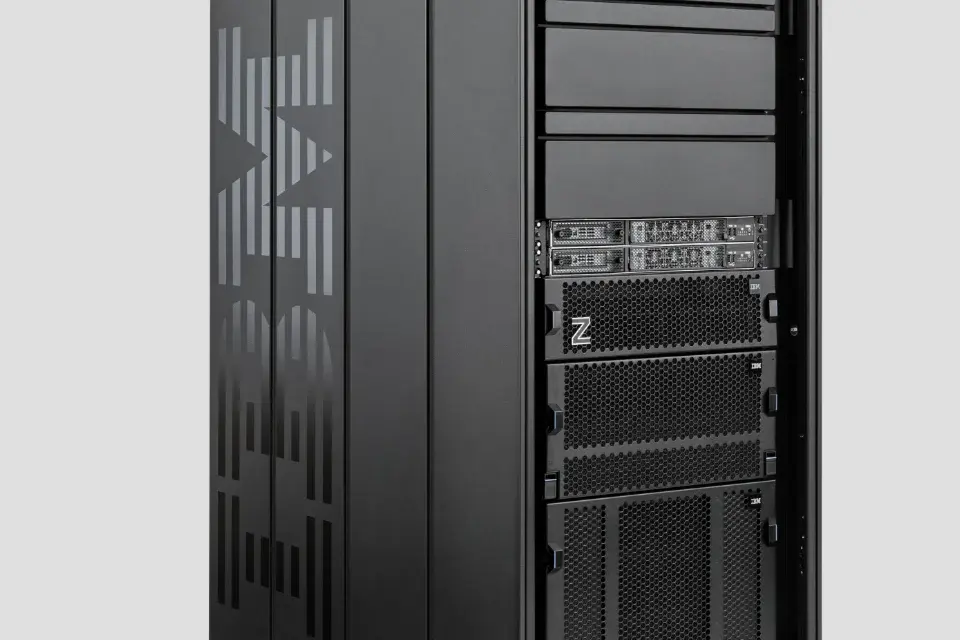

Modernization does not always require a rewrite. Many CICS and VSAM applications still run critical business processes and cannot be replaced quickly. SYSB-II helps modernize the operating model by improving availability and batch flexibility without requiring application source code changes for selected workloads.
Modernization has a branding problem.
Too often, it is treated as a synonym for replacement. Rewrite the application. Move the data. Change the architecture. Retire the old platform. Start over.
Sometimes that is the right path. But in many mainframe environments, it is not realistic in the near term.
Critical CICS and VSAM applications often contain decades of business logic. They support revenue, compliance, customer service, policy administration, claims, payments, retirement processing, banking, healthcare administration, and other high-value workflows. They are not kept around because people are nostalgic. They are kept around because they work.
The problem is not always the application.
The problem is the operating constraint around it.
SYSB-II helps organizations modernize that constraint.
The rewrite risk
Rewriting a legacy application can be expensive, risky, and slow. The code may be old. Documentation may be incomplete. Business rules may be embedded in years of accumulated logic. Interfaces may be fragile. Testing may be difficult. Replacement platforms may not fully match the behavior the business depends on.
Even when a rewrite is planned, it can take years.
During those years, the existing system still has to serve the business.
That creates a practical question: what can be improved now without disturbing the application logic?
SYSB-II is one answer.
Modernization as availability improvement
A system that is unavailable for hours every night does not feel modern to users, even if it runs on reliable technology. A system that cannot show current data until batch completes does not feel modern. A system that requires fragile file close and reopen procedures does not feel modern.
Modernization can begin by improving availability.
SYSB-II allows selected batch jobs to access CICS-owned VSAM files while CICS stays online. That means the organization can reduce downtime and data delay without rewriting the application.
This is modernization through operational flexibility.
Protecting what already works
The strongest argument for SYSB-II is not that old systems should never change. It is that valuable systems should not be disrupted unnecessarily.
If a CICS application already supports the business, SYSB-II can help extend its useful life by removing a major constraint: the batch window.
That protects:
- Existing business logic
- Existing user workflows
- Existing operational knowledge
- Existing data structures
- Existing support tools
- Existing CICS integrity controls
The organization gains more availability without forcing a risky application redesign.
Modernization for executives
Executives often face a difficult choice. They know the current system is critical, but they also know the business wants more availability, faster data, and less risk. A full rewrite may be too expensive or too slow. Doing nothing leaves the business exposed.
SYSB-II creates a middle path.
It helps improve the current system’s business value while larger modernization plans continue. It can reduce the pressure to rush a risky replacement. It can protect revenue and service levels while the organization evaluates long-term architecture.
The message is simple:
Modernize the operating model now. Rewrite only when the business case and risk profile make sense.
Modernization for technical teams
For system programmers and CICS teams, SYSB-II respects the mainframe environment. It does not ask teams to throw away what works. It routes selected batch VSAM access through CICS, preserving the role of CICS as the control point for the data.
That matters because technical teams do not want modernization theater. They want solutions that fit production reality.
SYSB-II is practical because it works with existing CICS and VSAM skills rather than requiring a wholesale transformation before value appears.
The “no code changes” advantage
No code changes is more than a convenience. It is a risk reducer.
If SYSB-II can improve availability for selected workloads without changing application source code, the project avoids many of the risks that slow legacy modernization:
- Regression testing across old business logic
- Rewriting poorly documented code
- Changing vendor package behavior
- Retesting downstream dependencies
- Disrupting stable operational processes
- Creating uncertainty for business owners
The result is a faster and safer path to operational improvement.
Frequently Asked Questions
Is SYSB-II a replacement for application modernization?
No. SYSB-II is not a replacement for every modernization project. It helps improve availability and batch flexibility for existing CICS and VSAM systems while broader modernization plans continue.
How can SYSB-II modernize without rewriting code?
SYSB-II changes how selected batch jobs access CICS-owned VSAM files. It routes batch requests through CICS, allowing the operating model to improve without rewriting application business logic.
Why avoid rewriting old CICS applications?
Old CICS applications often contain critical business logic. Rewriting them can create cost, risk, testing burden, and long project timelines.
Who should care about modernization without a rewrite?
CIOs, CTOs, application owners, system programmers, operations leaders, and business executives should care because this approach can improve availability while reducing transformation risk.
Closing Thought
Modernization does not always start with new code. Sometimes it starts by making the systems you already trust more available, more flexible, and less constrained by yesterday’s operating model. SYSB-II helps organizations do exactly that. It does not ask you to rewrite the application before the business gets value. It helps the application keep serving the business while the future takes shape.
About H&W